
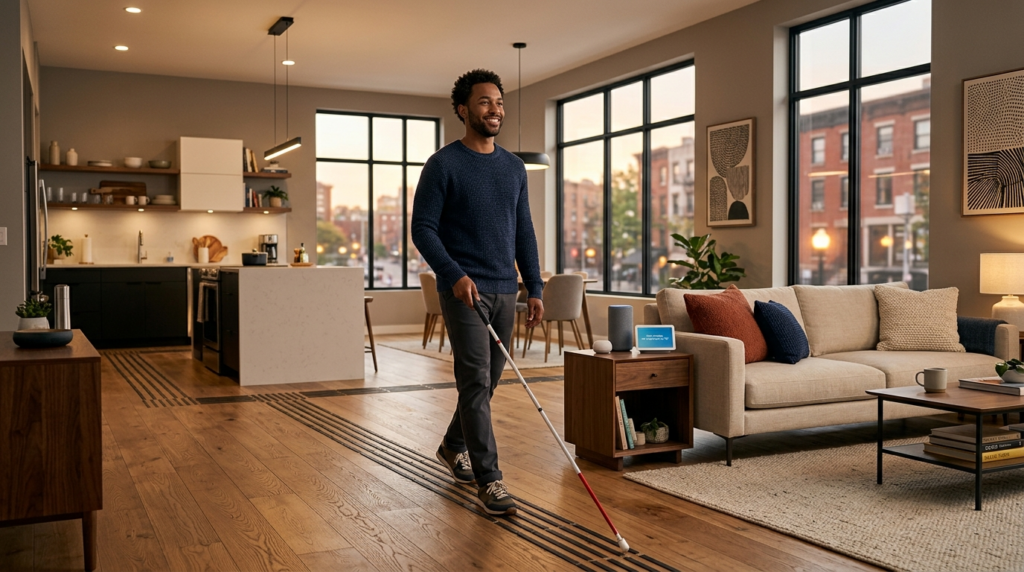
Finding a place to call home is a fundamental human need, but for blind and visually impaired adults across America, the search involves much more than just square footage and location. True accessibility means living in an environment that fosters independence, ensures safety, and removes the daily barriers that the sighted world often takes for granted.
Here is a closer look at the current state of accessible housing for the blind in America, the challenges they face, and what comprehensive support really looks like.
The Challenges of Traditional Housing
For someone with low vision or total blindness, a standard apartment or house can feel like an obstacle course. Common issues include:
- Poor Lighting and Contrast: For individuals with partial vision, dim lighting or monochromatic surfaces make navigating rooms incredibly difficult.
- Inaccessible Layouts: Complex floor plans, unexpected steps, and lack of tactile markers can lead to frequent trips, falls, and injuries.
- Isolation from Transit: A beautiful home is of little use if it is cut off from reliable public transportation, trapping residents indoors and limiting their ability to work or socialize.
What True “Accessible Housing” Looks Like
Comprehensive housing solutions go beyond the legal minimums of the Americans with Disabilities Act (ADA). True accessible housing is built around specialized pillars designed to empower residents:
- Physical Accessibility & Universal Design: This includes high-contrast flooring, tactile indicators on walls and doors, smart-home automation (voice-activated lights, thermostats, and locks), and completely open, trip-free floor plans.
- Personalized Support Systems: Independent living doesn’t mean living completely alone without backup. The best housing models offer trained staff, peer support networks, and community integration programs that help residents build life skills.
- Location and Community Connectivity: Placing accessible residences within walking distance of public transit, groceries, and medical care ensures that blind adults can safely manage their daily lives without depending on others.
Moving Forward: Building Brotherhood and Trust
Organizations across the country are discovering that housing is only the first step. To truly thrive, blind adults need a community—a brotherhood where they feel understood, supported, and valued. When housing is paired with advocacy, skill-building, and emotional support, it ceases to be just a roof over someone’s head and becomes a launchpad for a fulfilling life.
Every individual deserves a safe environment where their vision loss isn’t a barrier to their success. By investing in and supporting fully accessible residential spaces, we aren’t just providing housing; we are restoring dignity and independence.